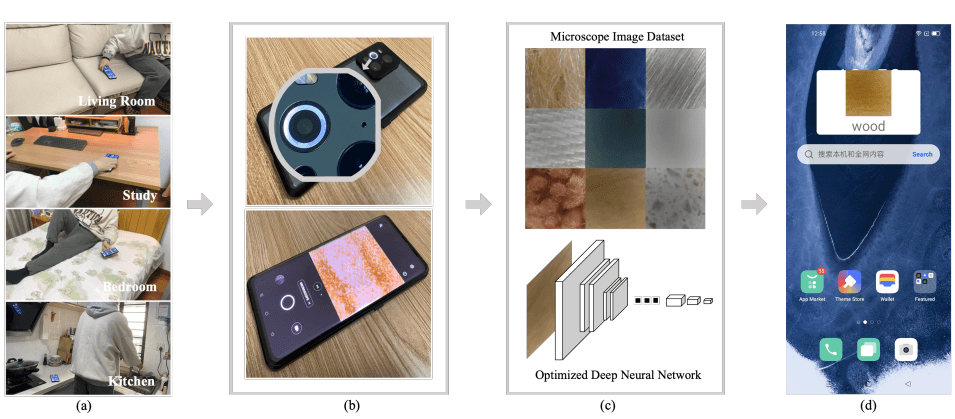
MicroCam (IMWUT ’23)
Turns a smartphone microscope camera into a low-cost sensor for recognizing contact surfaces and their fine-grained context.
Physiology and contextual interpretation
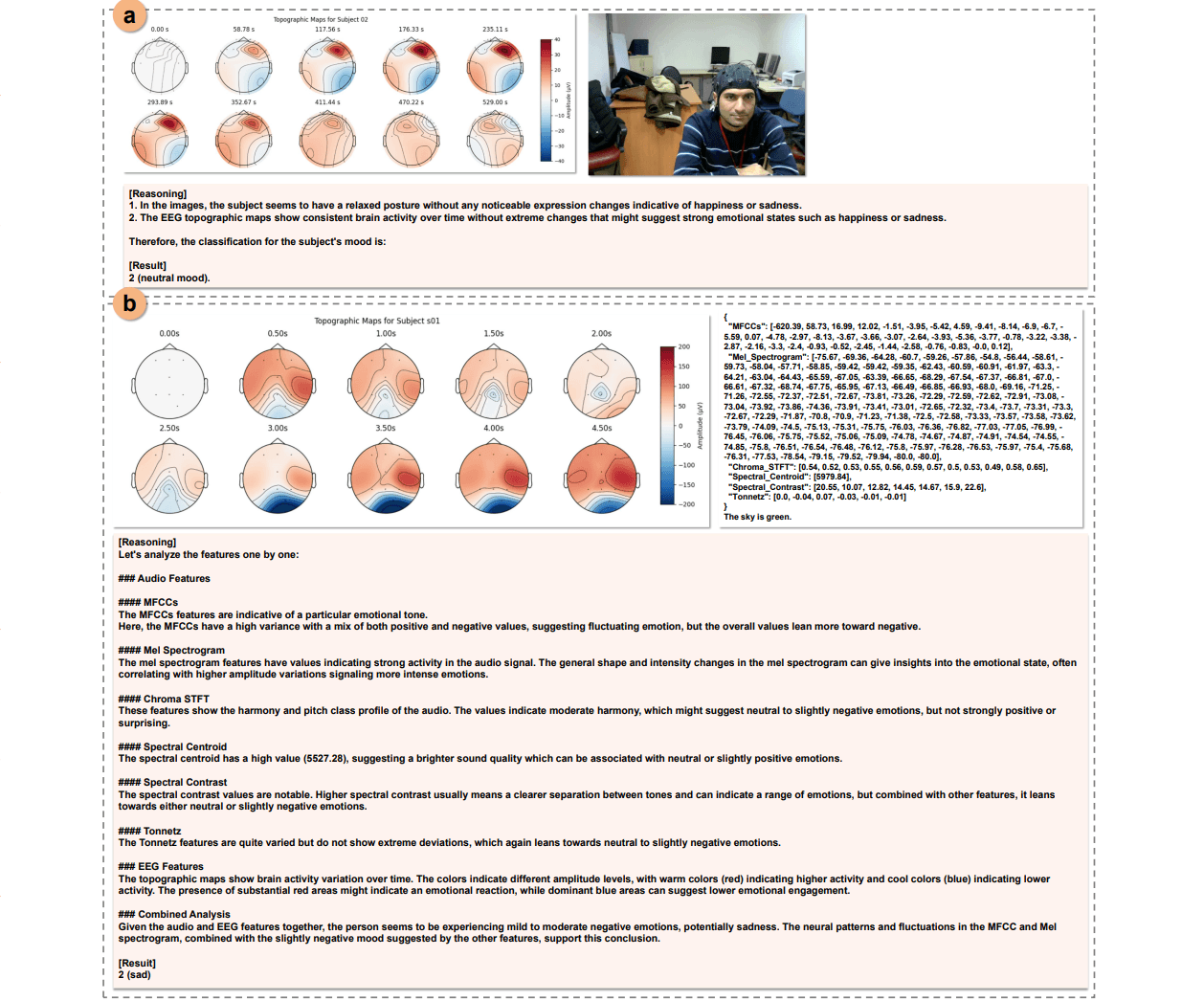
Explores EEG with facial or speech-derived context in language-model classification benchmarks, without claiming clinical validation.
MultiEEG-GPT (UbiComp/ISWC ’24)
UbiComp/ISWC Companion · Exploratory study
Read the paperThe question
The approach
This exploratory study evaluates zero-shot and few-shot language-model classification using EEG representations with available facial or speech-derived information. Audio-related inputs include transcripts and extracted features, not direct native audio processing.
Evidence & scope
The formal paper title is Exploring Large-Scale Language Models to Evaluate EEG-Based Multimodal Data for Mental Health, published in UbiComp/ISWC Companion 2024. MultiEEG-GPT is the project short name.
On MODMA with one-shot prompting, mean classification accuracy across five runs was 62.71% for EEG alone and 79.00% for EEG plus speech-derived context (Table 2). These are dataset-specific benchmark results, not clinical diagnostic accuracy.
The Home illustration is conceptual. It does not display recorded EEG, reproduce the benchmark, or infer a visitor’s emotions.
The work motivates studying complementary evidence rather than treating one physiological measurement as a complete description of a person. Acknowledging uncertainty is part of the broader research agenda, not a claim that this prototype provides calibrated or clinically validated judgments.
The related IntervEEG-LLM framework explores how multimodal interpretations can inform supportive dialogue. Its example cases are not evidence of clinical effectiveness. Explore IntervEEG-LLM
Explore this research directionTurns a smartphone microscope camera into a low-cost sensor for recognizing contact surfaces and their fine-grained context.
Accepted, in press
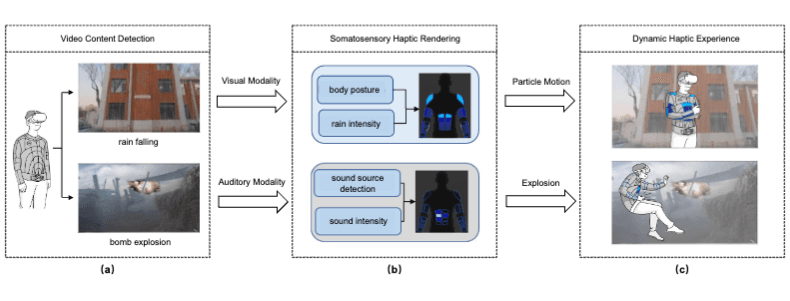
Transforms visual and auditory ambient cues into somatosensory electrical stimulation, extending haptic feedback in virtual reality.
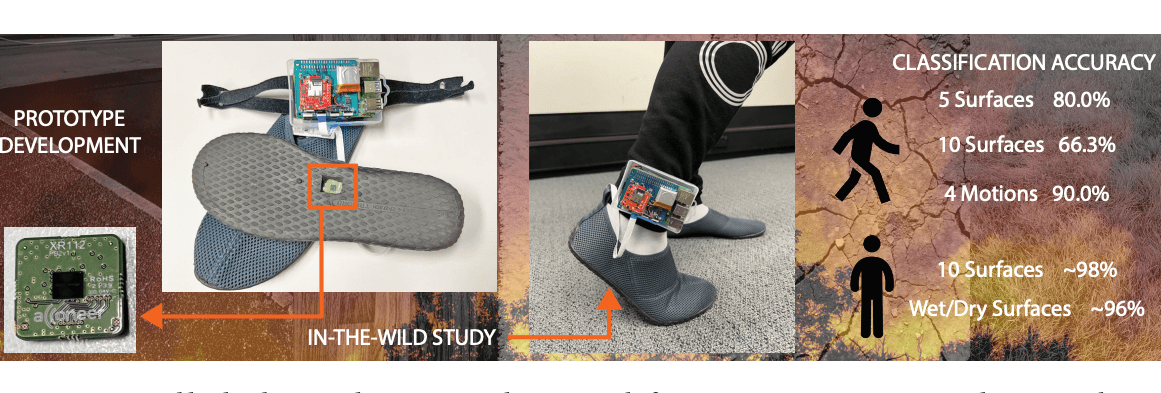
Embeds radar sensing in a smart shoe to recognize fine-grained ground-surface context during everyday movement.
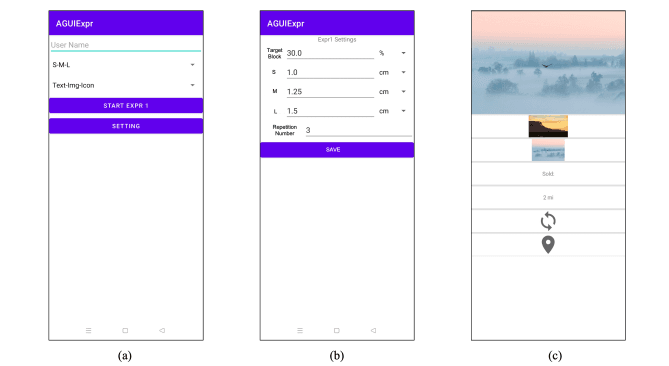
Adapts mobile interfaces to a user’s motion state so interaction remains legible and usable in dynamic settings.