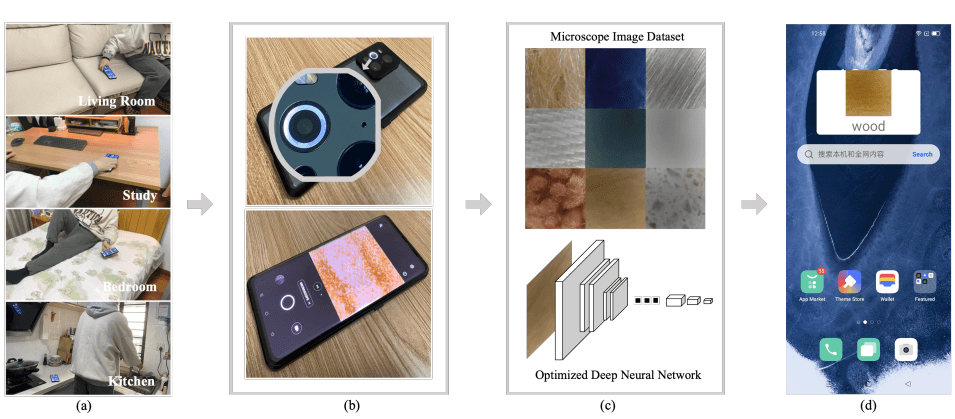
MicroCam (IMWUT ’23)
Turns a smartphone microscope camera into a low-cost sensor for recognizing contact surfaces and their fine-grained context.
Human-centered adaptation
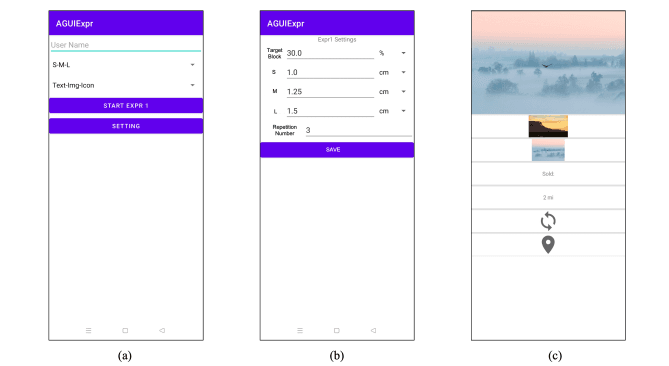
Adapts mobile interfaces to a user’s motion state so interaction remains legible and usable in dynamic settings.
Motion-Adaptive GUI (IUI ’23)
Read the paperThe question
The approach
Motion-Adaptive GUI adapts mobile interfaces to a user’s motion state so interaction remains legible and usable in dynamic settings.
Evidence & scope
This work concerns motion-aware interface design. It should not be interpreted as a deployment claim for the full reach of the broader DingOS platform.
This work connects a sensed human state to interface adaptation. It places the purpose of sensing in the interaction itself: understanding context is useful when it helps an interface respond to the person using it.
Explore this research directionTurns a smartphone microscope camera into a low-cost sensor for recognizing contact surfaces and their fine-grained context.
Accepted, in press
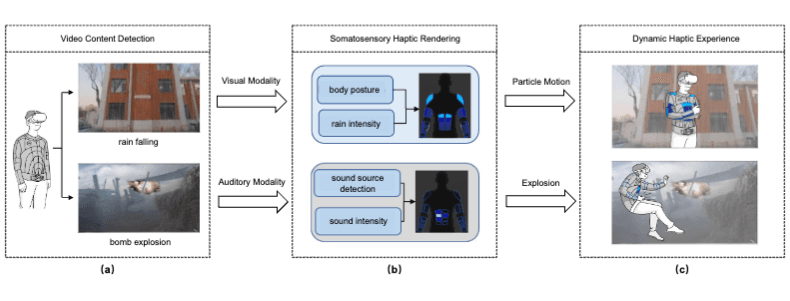
Transforms visual and auditory ambient cues into somatosensory electrical stimulation, extending haptic feedback in virtual reality.
UbiComp/ISWC Companion · Exploratory study
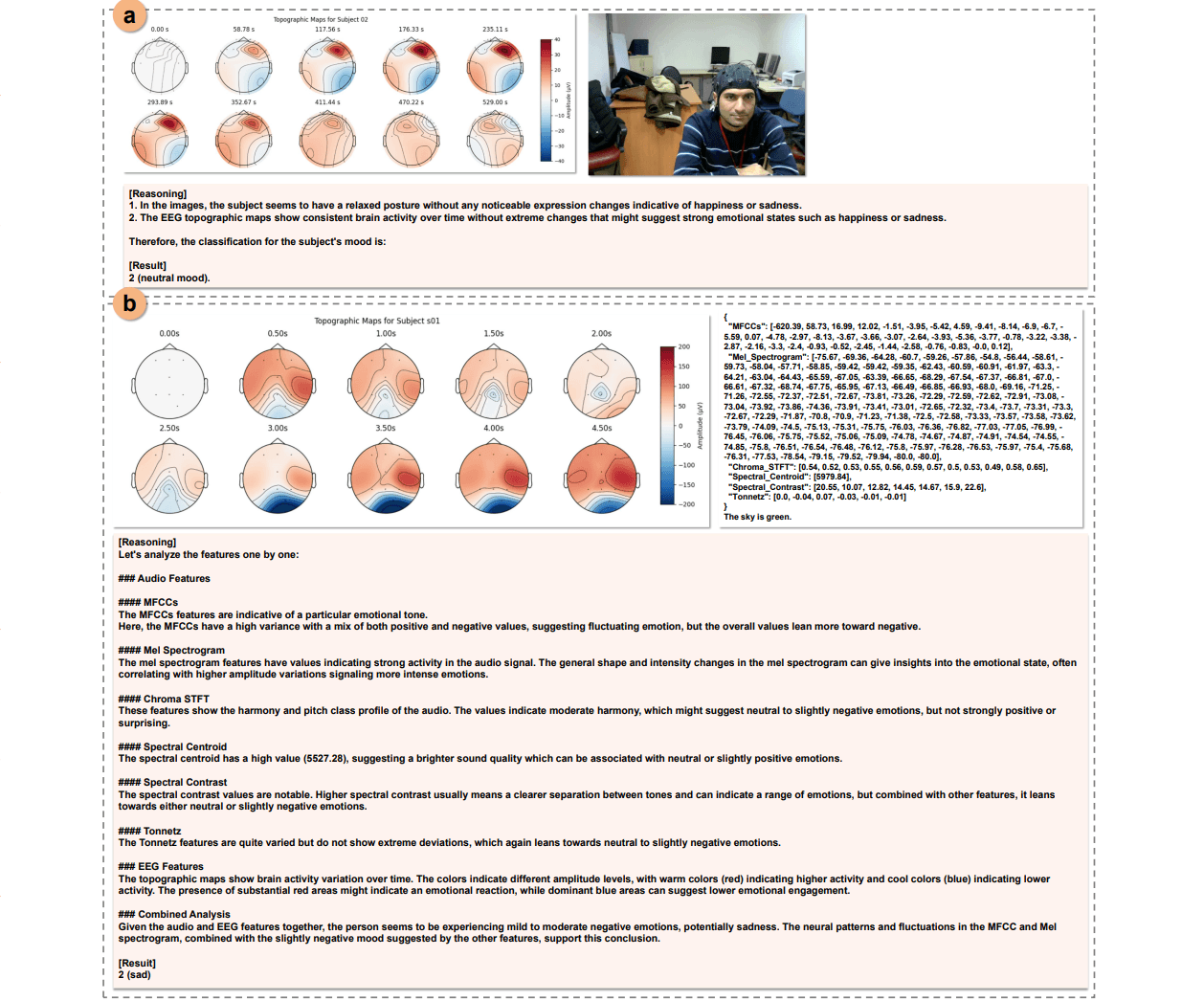
Explores EEG with facial or speech-derived context in language-model classification benchmarks, without claiming clinical validation.
The related IntervEEG-LLM framework explores how multimodal interpretations can inform supportive dialogue. Its example cases are not evidence of clinical effectiveness.
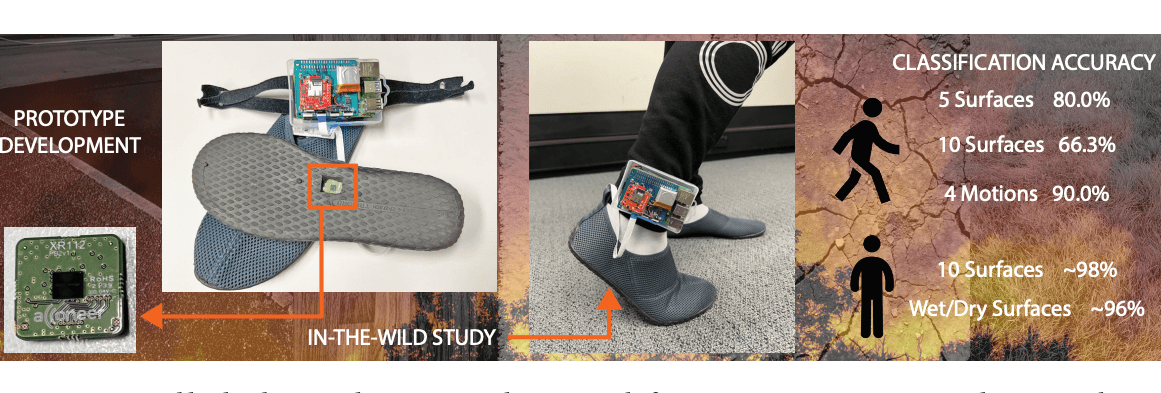
Embeds radar sensing in a smart shoe to recognize fine-grained ground-surface context during everyday movement.