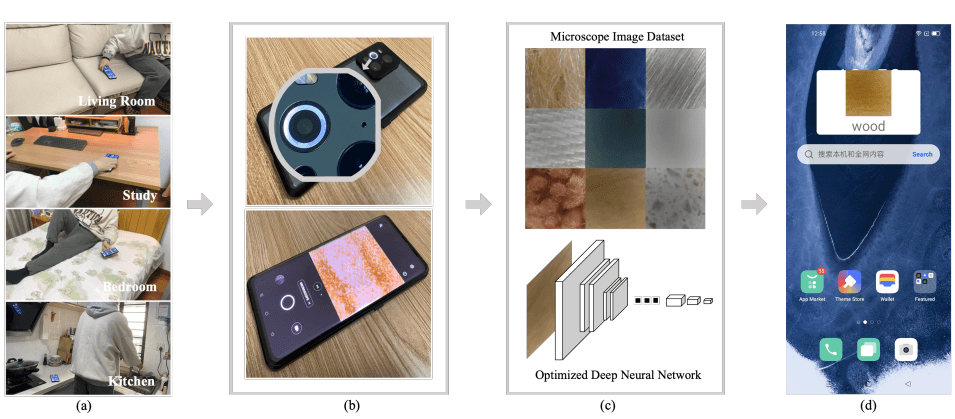
MicroCam (IMWUT ’23)
Turns a smartphone microscope camera into a low-cost sensor for recognizing contact surfaces and their fine-grained context.
Context-aware haptic feedback
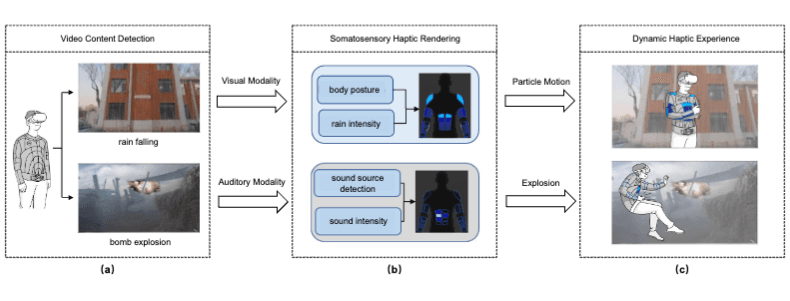
Transforms visual and auditory ambient cues into somatosensory electrical stimulation, extending haptic feedback in virtual reality.
Ambient2Hap (ICME ’26)
Accepted, in press
The question
The approach
Ambient2Hap maps rain and spatial sound events in immersive video to posture-aware electrical stimulation on a commercial Teslasuit. The contribution is the rendering pipeline, not a new tactile sensor or the suit hardware.
Evidence & scope
In a 30-participant study, mean presence ratings in the rain scenario were 4.90/7 without feedback and 6.03/7 with dynamic feedback (Appendix A, Table I). This is one subjective questionnaire item, not a general measure of realism.
The study examined controlled rain and explosion scenarios with short-term subjective evaluation. It does not establish universal superiority over fixed feedback.
Individual comfort and stimulation calibration remain important. The system does not claim closed-loop physiological control.
Accepted at ICME 2026, in press. A publication link will be added when available.
Sensing becomes useful through the feedback it enables. Here, event timing, direction, and body posture inform what a person feels. This is a haptic output system rather than a tactile sensing benchmark.
Explore this research directionTurns a smartphone microscope camera into a low-cost sensor for recognizing contact surfaces and their fine-grained context.
UbiComp/ISWC Companion · Exploratory study
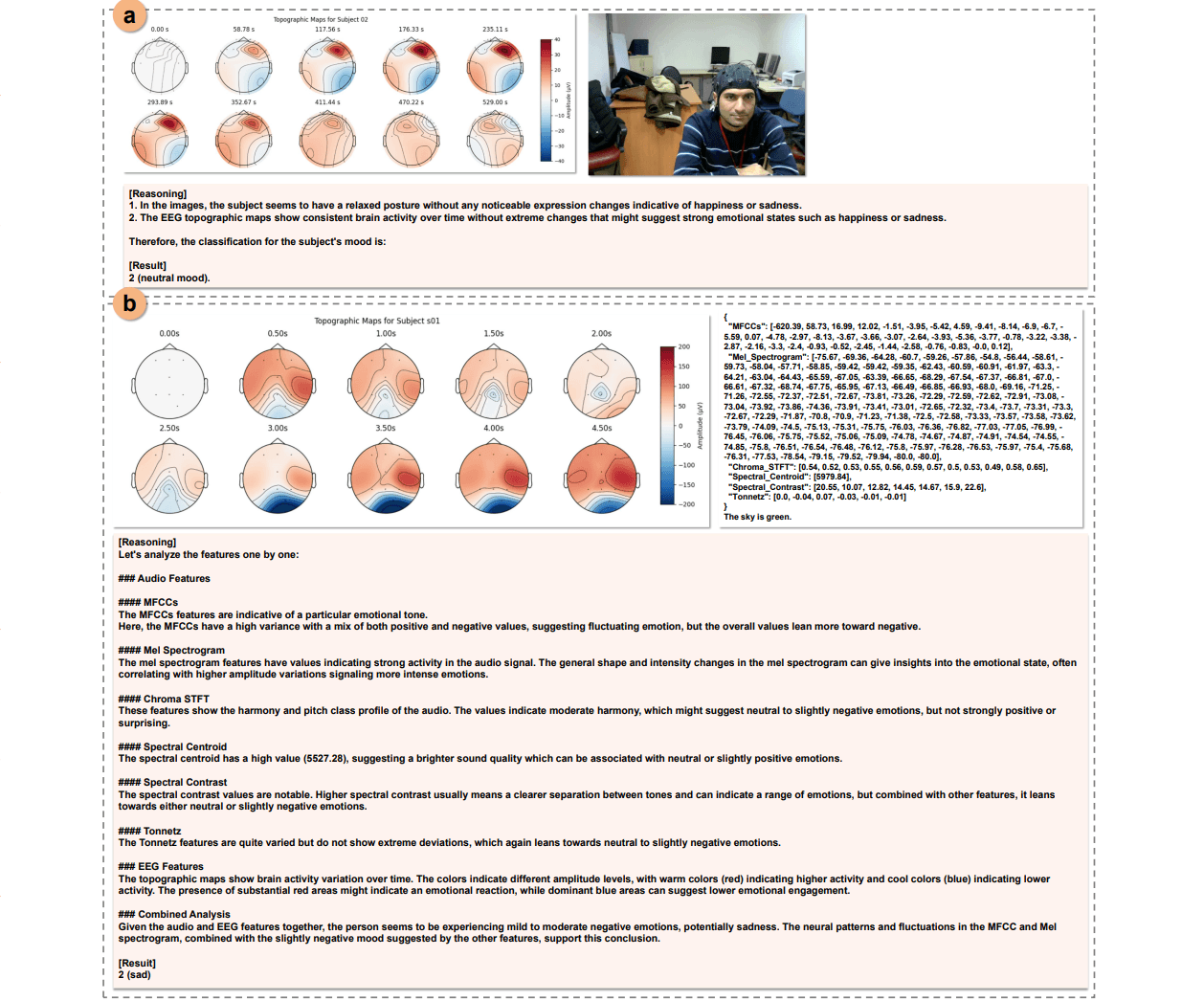
Explores EEG with facial or speech-derived context in language-model classification benchmarks, without claiming clinical validation.
The related IntervEEG-LLM framework explores how multimodal interpretations can inform supportive dialogue. Its example cases are not evidence of clinical effectiveness.
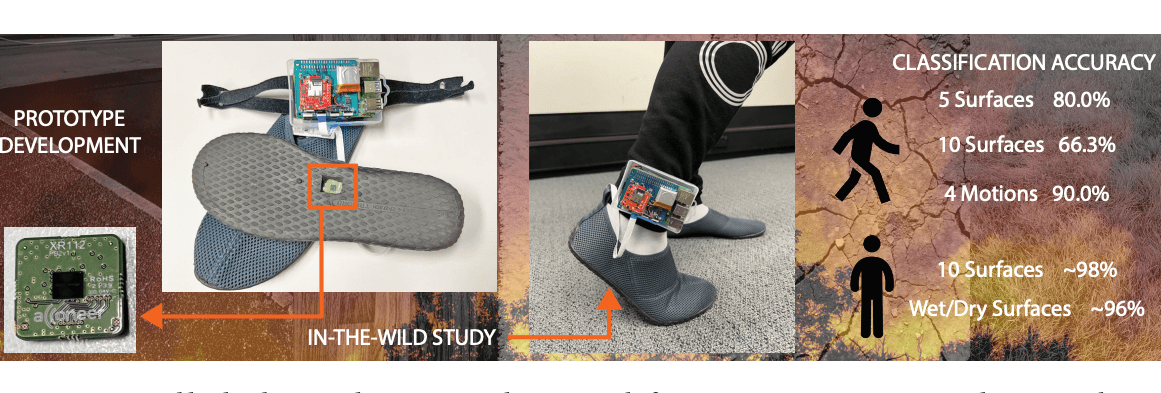
Embeds radar sensing in a smart shoe to recognize fine-grained ground-surface context during everyday movement.
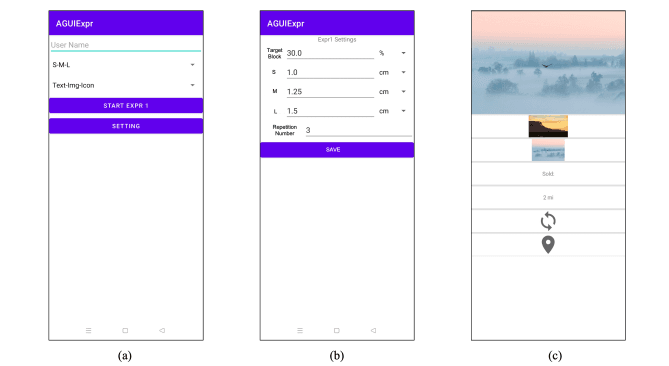
Adapts mobile interfaces to a user’s motion state so interaction remains legible and usable in dynamic settings.