MicroCam
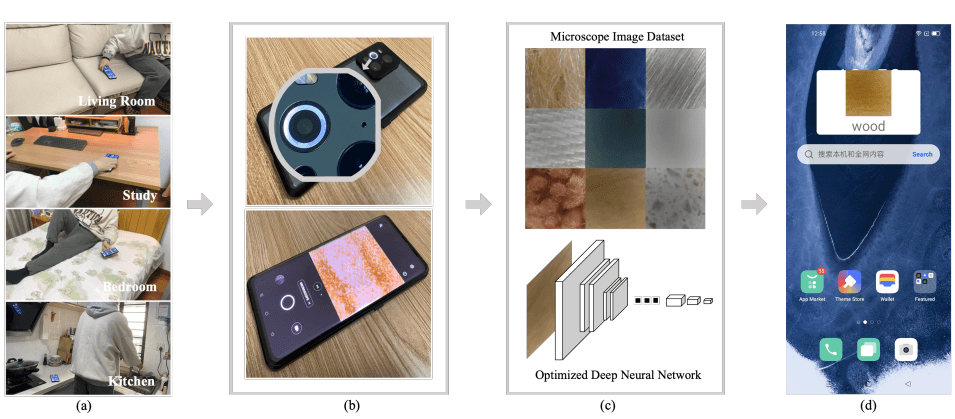
Turns a smartphone microscope camera into a low-cost sensor for recognizing contact surfaces and their fine-grained context.
Explore the systemI build systems that connect intelligent sensing, multimodal understanding, and human-centered interaction.
Why context mattersVision
A close-up reveals details. Context gives them meaning.
Human vision is not a pixel array. This wide-field estimate and camera pixel count use different measures—not a matched test of visual acuity. Sources: Roger N. Clark; Rubin Observatory.
My question: how can small visual details reveal the context of everyday interactions?
Explore MicroCamTouch
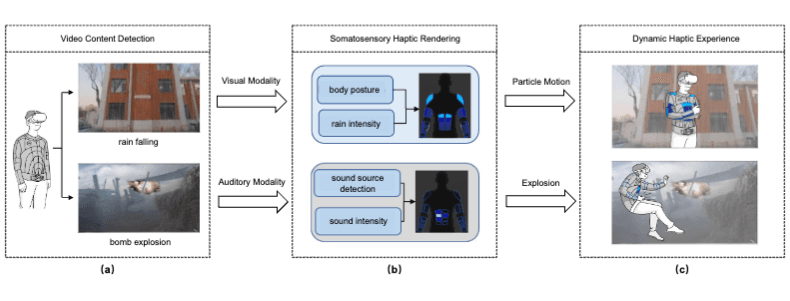
Sensing contact is one challenge. Choosing meaningful bodily feedback is another.
Mean fingertip threshold (15 participants) and sensor spatial resolution measure different things—not a ranking of overall touch. Sources: Van Boven & Johnson, 1994; Yuan et al., 2017.
My question: how can visual and auditory events become haptic feedback that fits the situation?
Explore Ambient2HapPhysiology
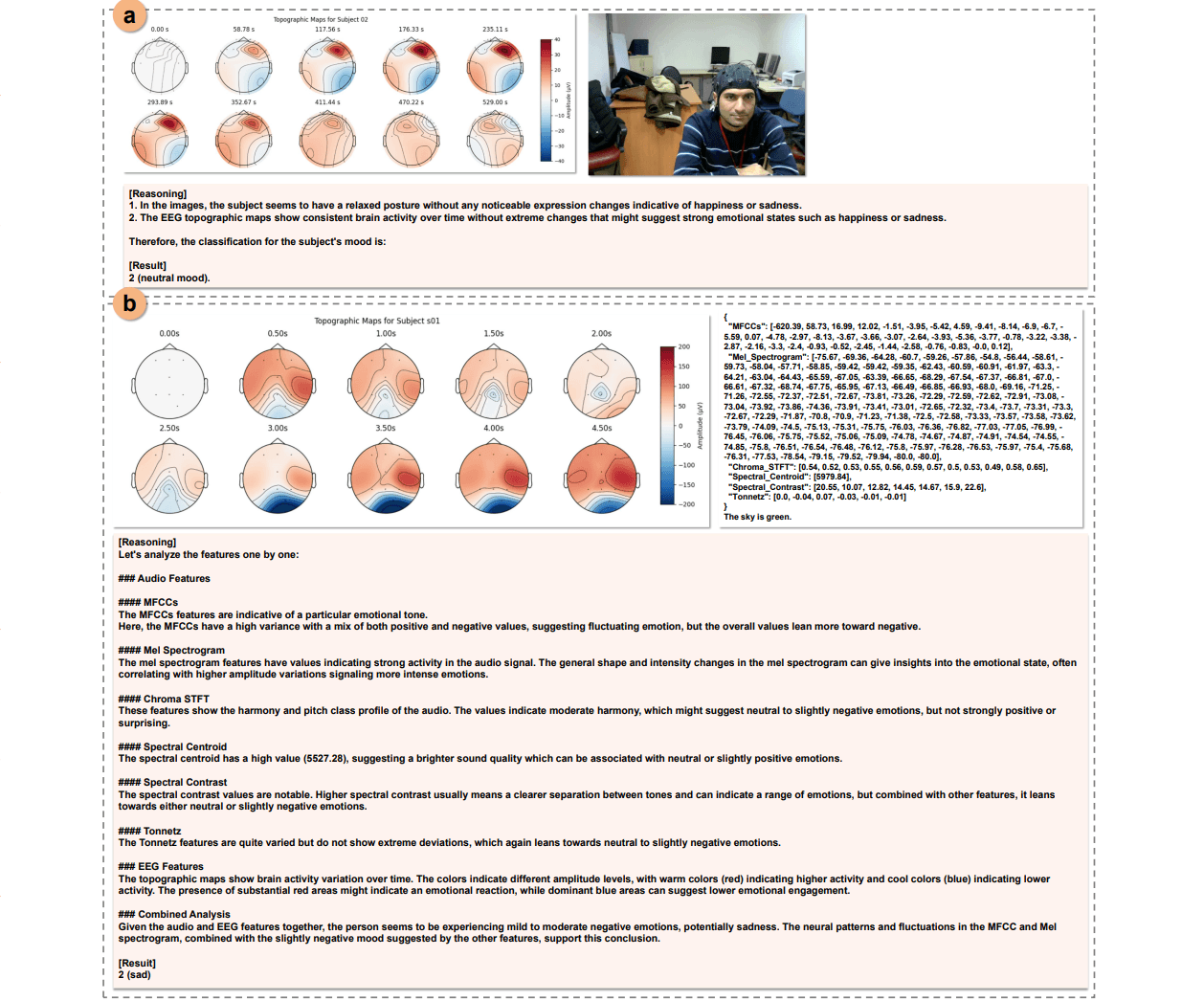
Physiological signals such as EEG can offer clues. Context helps interpret them, not turn them into certainty.
1 and 3 are illustrative counts, not experimental outcomes. In a 21-participant EEG study, alpha frequency varied across memory-task phases. Source: Samuel et al., NeuroImage 2018. No diagnostic claim.
My question: how can physiological signals and contextual cues support interpretation without turning a prediction into certainty?
Beyond measuring: interpret the situation, then respond with care.
A system-level approach
What can we observe?
Gather relevant cues. Ask about goals and preferences.
What might it mean?
Interpret in context. Keep uncertainty visible.
What should change?
Offer a useful response people can accept, adjust, or decline.
People’s feedback informs the next observation.
Make room for correction, changing needs, or no action.
Same observations, different goals. Choose a context, then compare the response.
01 / Observations
A dim room. Someone present. The camera shows them at the desk—not what they need.
Without the camera, light and presence cues remain. A stated goal needs no camera. Changed evidence requires fresh approval.
02 / Context
Presence does not reveal intent. Ask before acting.
03 / Response
Your context: Not specified
A dim room does not reveal a need. Ask before changing it.
Not applied. Lamp unchanged.
Turns a smartphone microscope camera into a low-cost sensor for recognizing contact surfaces and their fine-grained context.
Explore the systemTransforms visual and auditory ambient cues into somatosensory electrical stimulation, extending haptic feedback in virtual reality.
Explore the systemExploratory EEG interpretation and tailored intervention studies using language models and context. Not clinically validated.
Explore MultiEEG-GPT Read IntervEEG-LLMResearch & milestones
2026 · ICME
Ambient cues become electrical haptic feedback in virtual reality.
2026 · Interspeech
An end-to-end mobile infrastructure for speech impairment assistance.
2026 · Augmented Humans
Physiology-informed wellbeing recommendations in mixed reality.
2025 · CHI
A data-modality lens for designing enhanced context-aware systems.
2025–2026 · Research appointment
Developed multimodal affect-sensing pipelines and LLM-supported wellbeing interactions.